





For the past decade, fintechs scaled fast by renting capability – cloud infrastructure, engineering talent, and core systems. It worked. Until it didn’t.
The regulatory environment of 2026 has fundamentally closed that window. With the Digital Operational Resilience Act (DORA) now in full force and the EU AI Act raising the bar on AI transparency, the “our vendor handles that” defense is no longer viable. Regulators don’t accept it. Auditors don’t accept it. And increasingly, your board shouldn’t either.
The firms that will lead the next decade are not the fastest to launch. They are the ones that own what they build.
Your Code Is Now Your Compliance
As Agentic AI moves from experiment to infrastructure – autonomously handling lending decisions, risk simulation, and fraud detection – the logic inside these systems must be fully transparent, testable, and auditable at any moment.
If that logic lives inside a third-party black box, you have a compliance gap that no SLA can close.
DORA is explicit on this. Articles 28–30 require financial institutions to audit, test, and if necessary, substitute any critical ICT provider. That is not achievable through a contract. It requires genuine internal technical understanding. The engineers who build your guardrails need to be part of your institution, not billable resources on someone else’s payroll.
The requirement is clear: internal ownership is no longer a best practice. It is a regulatory condition.

The Hidden Cost of “Remote Teams as a Service”
The strategic mistake of the last decade was treating engineering as a cost center rather than a capital asset.
When a traditional outsourcing contract ends, the knowledge ends with it. The deeper the systems, the higher the cost of that dependency in operational continuity, regulatory exposure, and long-term competitive position. It is a risk that grows silently until it becomes impossible to ignore.
This is the vendor trap. And most fintechs are still in it.
The Build-Operate-Transfer Model: From Hiring Strategy to Ownership Strategy
The Build-Operate-Transfer model has matured significantly. In its original form, it was a smarter way to hire offshore. In 2026, it is a structured path to institutional ownership.
The model works in three distinct phases:
Build: A dedicated engineering team is established, embedded in your technical stack, regulatory context, and institutional culture from day one.
Operate: That team deepens its expertise over time, building not just software but institutional knowledge that is specific to your firm, your compliance requirements, and your competitive context.
Transfer: The team, the knowledge, and the IP become a permanent internal asset on your balance sheet, not a recurring vendor expense.
The Transfer Phase: The Milestone That Defines Institutional Maturity
The Transfer is not just the end of a vendor engagement. It is the moment a financial institution stops depending on borrowed infrastructure and takes full ownership of its engineering future – its IP, its data, and its people.
It also eliminates a risk that regulators are beginning to treat as a systemic concern: knowledge concentration in a single external provider. Firms that have completed this transition demonstrate what that looks like in practice. [See how NAB navigated this journey → https://cbtw.tech/au/insights/nab-innovation-centre-in-vietnam-build-operate-transfer-bot-partnership]
For any fintech serious about long-term resilience, the Transfer phase is not the conclusion of a BOT program. It is the beginning of a new institutional chapter.
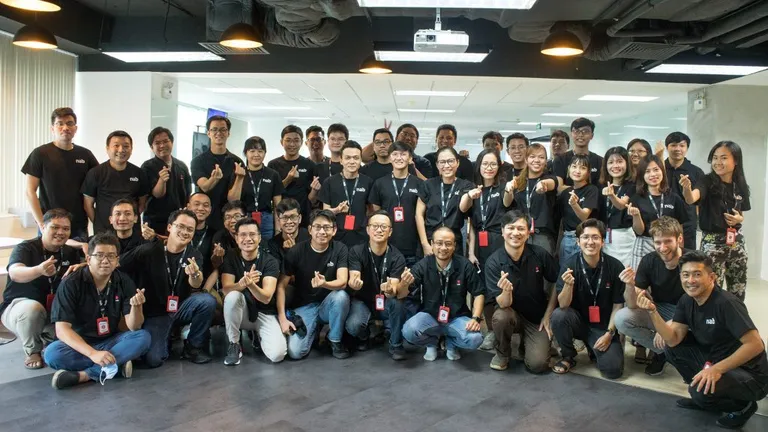
What The Build-Operate-Transfer Model Looks Like in Practice
CBTW’s BOT modelis built around one outcome: turning external engineering capability into a permanent internal asset.
The engineering hubs CBTW establishes, including urban centers in Vietnam like Ho Chi Minh City, Ha Noi and Da Nang – are designed from day one with a defined transfer path. The team, the codebase, and the institutional context are structured to move onto the client’s balance sheet, not remain a recurring line item.
This is not staff augmentation with a handover clause. It is a deliberate, phased ownership-transfer program, one that gives firms the internal technical depth to meet DORA’s audit requirements, manage ICT concentration risk, and operate with genuine resilience.
The Question Every Fintech Leader Should Be Asking
In an environment where regulators can audit your AI, your infrastructure, and your third-party dependencies, the question is no longer whether to own your engineering.
The question is how long you can afford not to.
Is your engineering function a permanent asset or a temporary expense? For firms ready to act, the Build-Operate-Transfer model offers a proven, phased path to full ownership. The answer defines your firm’s resilience, your compliance posture, and ultimately your competitive position for the decade ahead.