
Should I take my application to SaaS? That’s a question most software vendors have asked themselves, and for good reason. Why? Quite simply, the SaaS (Software as a Service) business model offers a win-win situation, perfectly aligning customer needs with business goals.
From a business standpoint, SaaS companies consistently show stronger performance compared to traditional software vendors. The SaaS model drives faster growth, generates recurring revenue, and achieves higher valuations, all of which make it a compelling choice. Recent reports confirm this: the global SaaS market is growing at a compound annual growth rate (CAGR) of 18.7%, positioning it as one of the fastest-evolving sectors in tech.
Even during times of uncertainty, SaaS businesses have proven remarkably resilient. While many industries struggled during the COVID-19 pandemic, SaaS providers experienced minimal disruptions—and in some cases, even accelerated growth in subscription adoption.
For customers, the appeal is equally clear. SaaS solutions offer convenience and reduce the need for large upfront investments. They simplify software upgrades, ensure continuous access to new features, and integrate seamlessly with emerging technologies, offering businesses a streamlined user experience.
It’s no surprise, then, that CHILI publish joined the ranks of over 17,000 SaaS companies worldwide, taking the plunge into the exciting world of saasification. Their journey reflects the intricate and rewarding process of transitioning to a modern, cloud-based solution.
Key Challenges
CHILI publish expressed the will to transform its entire software business. That implied changing its software offering from an on-premises deployment model to offering it as a service in a SaaS model, reworking entirely how technology was delivered.
CBTW supported the team in the construction of a solid foundation for their new SaaS business success by understanding, preparing and executing the transition.
Our role was to:
- Define the architecture on Microsoft Azure together with CHILI product engineers
- Implement the solution using DevSecOps best practices
- Provide 24/7 support
Our Approach
The original application architecture was not designed for a SaaS offering, therefore a new viable solution had to be developed.
To solve these constraints, we:
- Deployed the application as a stateful application on an AKS (Azure Kubernetes Service) using custom metrics for scaling
- Provided guidance in refactoring certain parts of the software to make it cloud ready
- Optimized it for cloud in terms of costs, automated deployments and management efficiency
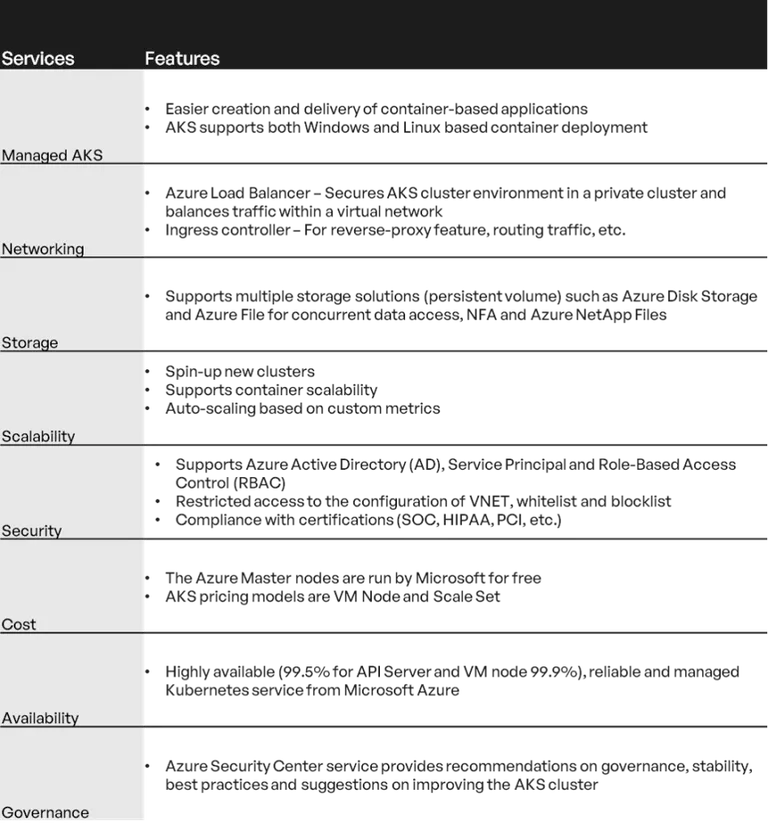
Our Cloud experts designed a container-based infrastructure for simpler scaling, better infrastructure management, and optimized resource usage. We used Azure Kubernetes Service (AKS) – a fully managed service in Azure – a public cloud computing service that allows to deploy and run a Kubernetes cluster in Azure without the overhead of managing the control plane, as it is fully hosted in Azure. Only the K8s worker nodes needed to be managed. AKS appeared as the best option for deploying a cloud-ready and microservice-based cloud-native application as it also supported the containerization of monolithic applications.
Azure Kubernetes Service (AKS) include a lot of features which help us in terms of scalability, performance, security, governance etc., during containers deployment and management. The major features are the following:
After understanding how the application worked and grasping the different project’s requirements, we started designing the infrastructure architecture around AKS and wrote the Terraform configuration (Infrastructure as Code, IaC) for that. We deployed the first cluster that allowed us to perform the first tests and validate the PoC. After running several performance tests, we were able to find the best sizing for our cluster’s nodes and containers, as well as the best option for storage.
We work with CHILI publish continuously to improve our monitoring and alerting, security, backup & recovery, CI/CD integration, performance and scalability.
“We needed a partner that would provide a qualitative, timely, and reliable delivery. CBTW meticulously assessed our setup, objectives and requirements and translated this into a roadmap that worked for all partners involved. Accurate, precise, and on schedule.”

– Frank Maes, VP Delivery @ CHILI publish
Benefits
CHILI publish was able to start with SaaS very fast, knowing some compromises needed to be made until certain architectural code changes were done.
From a technical point of view the new multi-tenant architecture allowed CHILI publish to reduce the cost of development investment, maintenance and support.
The automated deployment using Terraform and TeamCity made release cycles a lot shorter, while the automatic scaling allowed for greater uptime and more availability.
Developers can work faster since they operate in a controlled infrastructure environment. Contrary to the past, where every customer had its own infrastructure.
“There is also a significant impact on how we operate as a customer-first business. Having different customers running on different infrastructures, tends to complicate providing fast support and guidance 24/7. We can now support our cloud customers much faster.”
– Frank Maes, VP Delivery @ CHILI publish
Overall, this transformation from SaaP to SaaS was an obvious win for CHILI publish. They gained a more stable revenue stream in the form of subscriptions and enabled the development team to spend more time in carrying out development efforts that keep their users happy and on board.
“So far, we have moved 40% of our business into the cloud. We anticipate a 250% increase of cloud business alone this year. Our customers are revving up for growth and scaling. Our SaaS offering enables them to do just that and allows us to be just as flexible as they are.”

– Kevin Goeminne, CEO @ CHILI publish