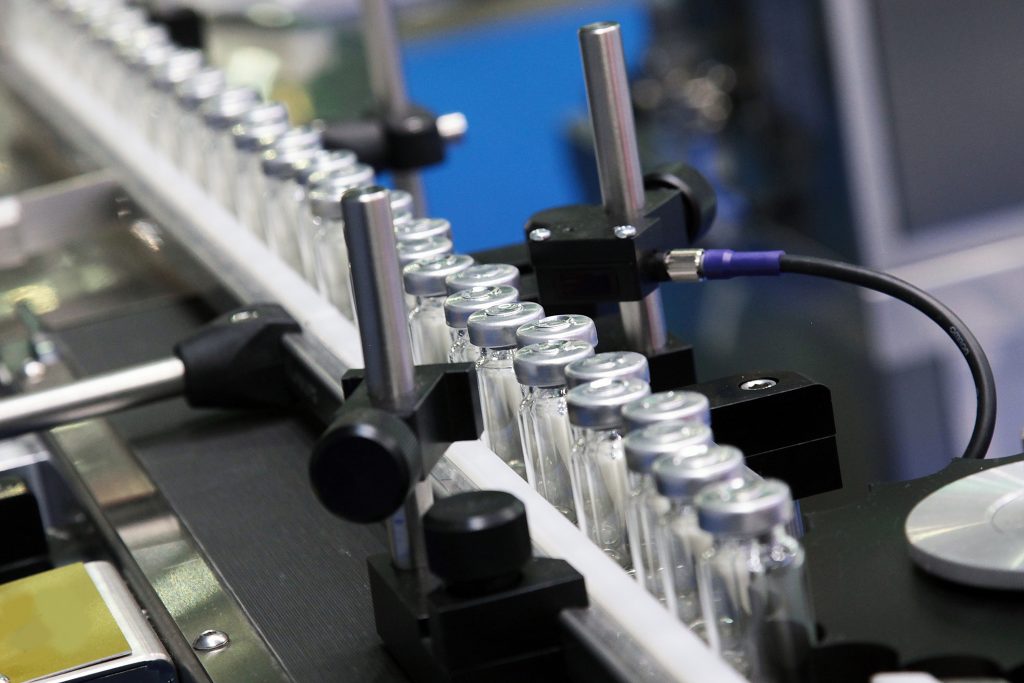
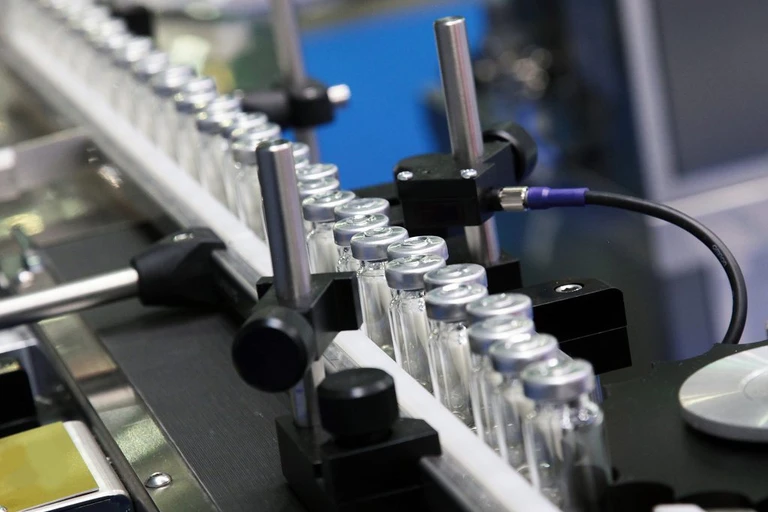
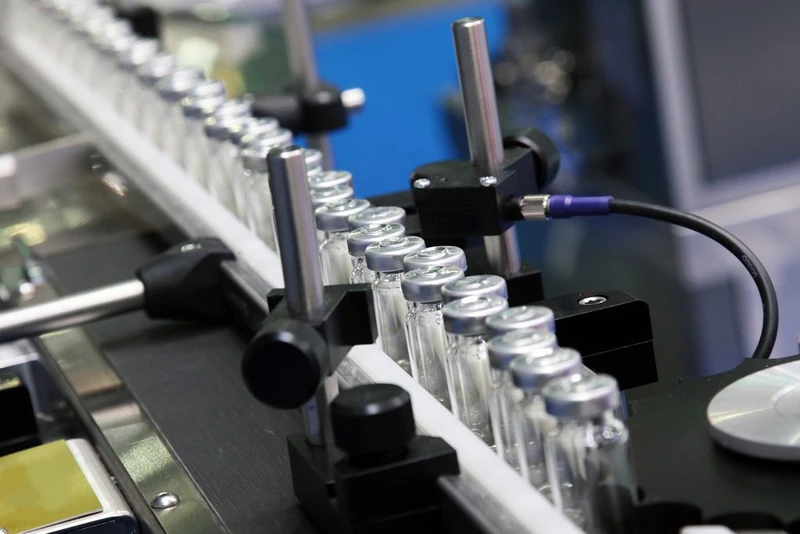
This transition allowed the client to set up a smart factory as per the Pharma 4.0 ™ initiative launched by the International Society for Pharmaceutical Engineering (ISPE).
The context
The client is a multinational biopharmaceutical firm that required assistance setting up its new production unit in Belgium. This production unit had to be fully automated, according to the Pharma 4.0™ standards.
Most industrial sectors are experiencing a rapid advancement towards implementing industry 4.0 technologies. This leads to greater operational efficiency and increased competitive advantage. Pharmaceutical manufacturing is no exception to this trend.
The pharmaceutical industry is, however, subjected to much stricter regulatory laws. Thus, transformation to Pharma 4.0 ™ or smart factories is relatively slower and more complex.
CBTW was able to meet the high standards of regulation in the pharmaceutical sector, such as the FDA and GMP regulations. Moreover, important requirements such as data integrity, documentation, and processes met the FDA regulatory compliance and the GMP practices authorization.
Furthermore, we helped the client to build the production unit from scratch and standardize the production and cleaning process (CIP). To add to that, the automation process and the evaluation of the automation code was done according to the ISA 88 regulation of automation.
Challenges of our client in the pharmaceutical industry
- Equipment not standardized and coming from different parties: Various parties such as the supplier, manufacturer, and SME (subject matter experts) reviewed and confirmed the processes and equipment used. In addition, they needed standardization for the P&IDs, because each valve, pipe, or other equipment came from different suppliers. Therefore, in order to achieve standardization, the entire process including interaction of each piece of equipment had to be adapted as per the desire of the client.
- Equipment not readable for automation: Building the automation philosophy. It was necessary to modify and improve the design of piping and adapt the Piping and Instrumentation Diagrams (P&IDs) such that it was readable for automation. Furthermore, adjust and modify to verify valves interaction with each other in a standardized manner.
- Non-uniformed automation philosophy: Adjusting the automation philosophy, tailored for client’s needs. We organized the process of Functional Description Specification (FDS) where the code was further standardized and adapted.
- Meeting the high standard regulations for cleaning efficiency: Implementation of standardized cleaning practices. Implemented to maximize cleaning efficiency and meet the standards, as dictated by the regulations of the FDA’s ‘best cleaning practices’, in addition, the process, connected to the MAIN USER SYSTEM, and automated. Evidently, this aspect is one of the main challenges for many firms as the equipment was from different suppliers and had to be brought to common grounds.
Our approach towards Implementing Pharma 4.0 ™
The detailed solution-based approach to each challenge
1. Accomplishing standardization
To accomplish standardization, we built P&IDs to dictate exactly how each piece of equipment should function, interact, act, clean, produce, and sterilize. Moreover, we also helped to alter and improve the P&IDs until it met the client’s needs.
2. Building the automation philosophy from scratch
Step A
The approach adopted in building the automation was to break down the units into smaller, efficient, and manageable modules:
- Smaller module called control modules (consists of a few components) tested, automated and validated appropriately.
- After accomplishing this, a block connected to other blocks to form a larger one called the Equipment Module (EM).
- Afterwards, multiple EMs, fully automated and inter-connected to form a unit.
The units are, as a result, now fully automated. This method allows for a ground-up approach to the development and validation of the process for automation.
The automation was achieved, as per the FDA regulation for automation, highly recognized as the ISA 88 Standard for automation.
The two main advantages are:
- It allowed the client to pass the regulation check and be certified to sell globally.
- The client could produce most efficiently, and future alterations can be made with minimal difficulty.
STEP B
Through the integration of Siemens PCS7, digital maturity was attained. More specifically, the production unit is now interconnected, monitored, fully automated, and controlled centrally.
3. Reviewing Functional Description Specification (FDS)
FDS is a written document on the function of each automation philosophy. Since the project consisted of inputs from various suppliers, it was essential to constantly evaluate each process at play. Hence, sessions of RFIs (Responses for Information) were often organized for evaluation.
Furthermore, we assisted in bringing the various parties on the same level and building the framework for standardized automation for the entire production unit.
4. Standardized CIP
The 2nd aspect of the project in which we assisted the client was the cleaning. In the pharmaceutical industry, cleaning is a crucial part of the entire process. The vessels and pipes were, again, from different suppliers, but were all adjusted to have a common standard for cleaning purposes. Increasing cleaning efficiency and allowing the project to pass the ‘best cleaning practice‘ as per FDA regulations.
An example, is the ‘Caustic Standard’ pace. Standard pace advised by the FDA regulation.
Results of implementing Pharma 4.0 ™
Results
Overall, reliable standardization and implementation of autonomous automating systems was achieved. The production unit, wholly interconnected with its processes streamlined!
Thus, leading to the following advantages:
- Improved control of operations
- Reduced production variability
- An increase in precision
- Reduction in error
- Reduced human reliance
Conclusion
To sum it up, the project allowed the client to attain digital maturity through increased control, laying the foundation to build future digital transformation strategies, which can potentially utilize other technologies from Industry 4.0.
Inevitably, thanks to the project, our client achieved a strong competitive edge thanks to the improved product quality, and reduced costs in the long run. Such an advantage is relatively difficult to accomplish in the pharmaceutical industry.