





Key Challenges & Context: Rising Azure Costs, Low Security, and No Governance
Our client is a certified Belgian inspection and consultancy company specializing in energy certifications, utility inspections, and real estate compliance. Known for combining multiple services in a single visit, like EPCs, electricity inspections, and 360° building photography, the company has earned a strong position in a market shaped by strict energy and safety regulations.
But as they scaled their operations, the Microsoft Azure infrastructure supporting those services began to reveal some cracks.
Monthly bills were increasing, critical security controls were missing, and the absence of cloud governance made it difficult to scale safely.
Our client needed to reverse the trend and bring order to its cloud operations before the consequences became even harder to manage.
The Approach: Fixing Cost, Security, and Governance in Phases
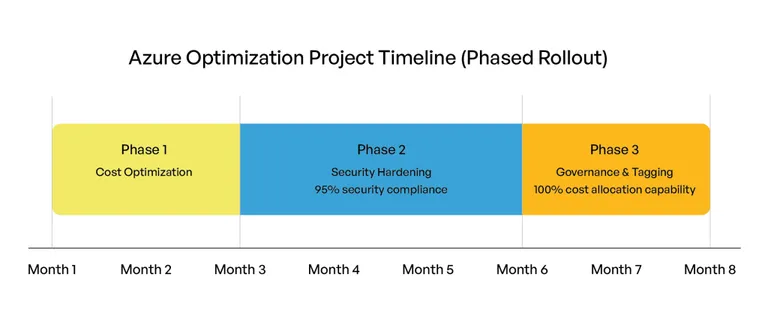
Our client needed a structured way to regain control of their Azure environment while keeping daily operations running.
We designed a solution focused on one making their infrastructure cost-effective, secure, and scalable, without disruption.
The first step was a full infrastructure audit, covering every inch of the Azure environment. We looked at 518 active resources, mapping costs, configurations, security postures, and naming conventions. The audit revealed misaligned resources, critical vulnerabilities, and governance blind spots. This helped us pinpoint where budget was wasted and where risks were.
Here is a quick overview of the results:
1. Lack of cost visibility and resource sprawl
The audit uncovered nearly 40% in monthly overspend on the company’s Azure bill.
Behind that figure were 186 unused or orphaned resources still consuming budget, along with oversized virtual machines and inefficient storage configurations. Without proper tagging or cost allocation tools, teams had no way to understand who was using what or why.
2. Security compliance far below regulatory thresholds
With a baseline security compliance of just 17.6%, the level of exposure was unsustainable for a company operating in such a regulated market:
- 370 resources had no encryption in transit
- 173 lacked security logging, making breach investigations impossible
- Core protections like HTTPS/TLS and network segmentation were missing
3. No cloud governance or ownership model in place
- No tagging policies (0% compliance across the board)
- Naming conventions ignored (98.6% of resources were non-compliant)
- Resource ownership unclear making incident response slow
To prioritize efforts, we used a risk-based matrix that weighed each issue by:
- Financial impact
- Security exposure
- Implementation complexity
This allowed us to build a phased plan in three waves:
Phase 1: Azure Cost Optimization
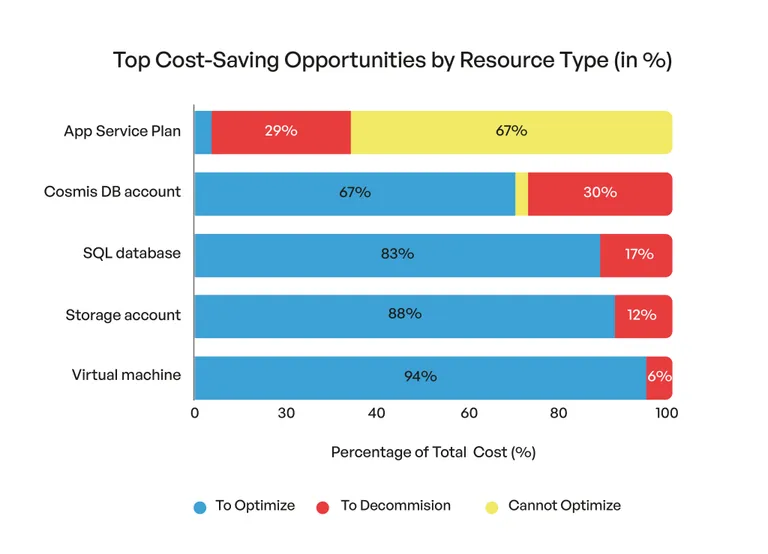
We immediately tackled the unused and overprovisioned resources driving up costs. That included decommissioning idle VMs, right-sizing active workloads, and streamlining storage.
→ Impact: We cut nearly 40% of monthly Azure spend within the first 60 days.
Phase 2: Security Hardening
We addressed the most critical vulnerabilities next, adding encryption in transit, reactivating security logging, enforcing HTTPS/TLS policies, and locking down network controls.
→ Impact: Security compliance raised from 17.6% to a 95% target baseline
Phase 3: Governance & Tagging
We then turned to governance, deploying Azure Policy to enforce naming standards and tagging rules. That way, teams could track spend, assign ownership, and manage growth more efficiently.
→ Impact: 100% cost allocation capability and long-term compliance structure
While the strategy was clear, implementation required careful coordination. Some of the key challenges we faced included:
- Avoiding operational disruptions: Many misconfigured resources were tied into production environments. We carefully mapped dependencies to prevent outages during decommissioning.
- Multiple stakeholders and unclear ownership: Tagging and naming governance required collaboration across departments. We coordinated efforts between IT, operations, and business teams to confirm ownership and validate what could be removed or restructured.
- Technical debt blocking change: Fully remediating naming conventions would have meant rebuilding over 500 resources, which would make us risk major downtime. We deferred this step, focusing on automation and policy enforcement to prevent future sprawl.
Tools and methods that made it possible:
- Azure-native tools for auditing and policy enforcement
- Custom tagging frameworks aligned to cost centers
- Security benchmarks aligned with Microsoft and industry standards
- Phased project governance to maintain alignment and track results
Benefits: A Secure, Cost-Efficient, and Scalable Azure Environment
In just a few months and with the help of our Azure experts, our client turned its fragmented and high-cost Azure environment into a secure, well-governed platform with immediate returns and a long-term payoff.
Up to 40% Monthly Savings on Azure Spend
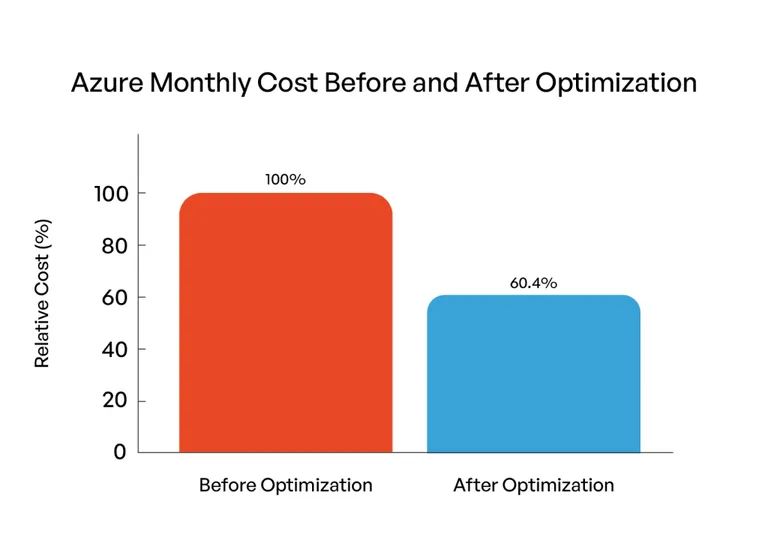
- The initiative resulted in a 39.6% reduction in monthly Azure costs.
- The majority of savings came from resource right-sizing and decommissioning alone
- We generated a significant share of the monthly savings in the first phase through unused resource cleanup (cost reductions materializing within the first 60 days)
With improved tagging and policy enforcement, the team now has full visibility on cloud spend, making it easier to tie budgets to business needs and prevent new sources of waste.
95% security compliance reached
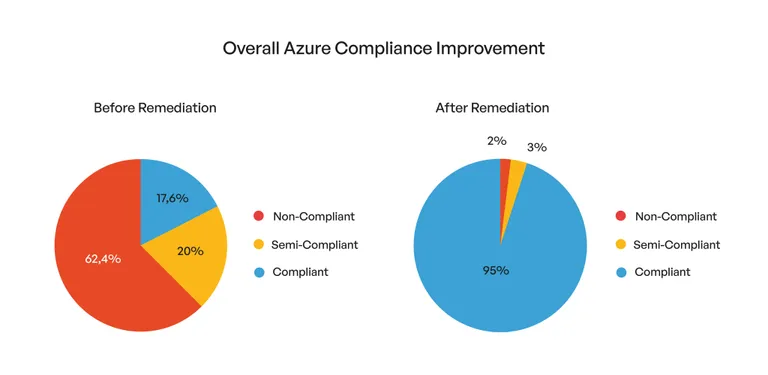
- Compliance improved from 17.6% to a 95% target
- 370 resources secured with encryption in transit 173 resources activated with logging, supporting audit readiness and breach response
- Consistent HTTPS/TLS and network control policies applied across the infrastructure
100% cost allocation capability unlocked
- 100% cost allocation capability through enforced tagging Improved incident response, thanks to enhanced logging and ownership visibility
- Scalable governance via Azure Policy, helping avoid technical debt as new resources are added
- Stronger collaboration across IT and business units through shared frameworks for cloud operations
Lessons Learned and Recommendations
Our client’s Azure optimization journey is a reminder that cloud cost, security, and governance are deeply connected. By prioritizing quick wins and building long-term structure, the team achieved measurable ROI while reducing risk and complexity.
What made the difference:
- A risk-based prioritization that focused first on immediate financial impact
- A phased rollout that minimized operational disruption
- Clear collaboration between business and IT teams to build alignment and ownership
- The use of native Azure tools and policies to make change stick
What could be improved:
Like many growing organizations, our client faced challenges around internal resource ownership and cloud maturity. If they could do it again, they would likely invest earlier in:
- Cross-functional training on tagging, cost responsibility, and cloud security
- Formal ownership mapping for faster decision-making and cleaner audits
- Earlier inclusion of monitoring and DevOps reviews to further reinforce governance
Are You Facing Similar Issues?
Cloud environments do not become chaotic overnight but they do become expensive, exposed, and unmanageable over time. This case shows that with the right focus and roadmap, Azure cost optimization is just the starting point. The bigger opportunity is building a cloud foundation that is cost-aware, secure by default, and ready to scale.