





Evolving market conditions and rising customer expectations require software development teams to accelerate innovation without sacrificing stability. To keep pace, organizations often need to scale their engineering resources by broadening capabilities and building larger, more flexible teams that can adapt quickly and deliver long-term success.
Remote hiring opens access to diverse skills and global expertise. However, real progress requires distributed teams to collaborate effectively through clear priorities, aligned roles, and consistent communication. These elements transform growing headcount into sustainable innovation and reliable delivery, enabling your organization to maintain agility and quality even as the team scales.
Key Foundations to Successfully Scale Remote Team
To realize this progress, organizations must establish strong foundational practices that promote alignment, collaboration, and a sense of ownership among team members. These core principles form the bedrock enabling distributed teams to overcome challenges related to distance and time zones, allowing them to operate seamlessly as a unified, productive group.
- Shared Understanding: Aligning around vision, key priorities, and milestones keeps remote members focused and coordinated, reducing ambiguity and enabling steady forward momentum.
- Regular Collaboration: Predictable communication rhythms – such as daily stand-ups, sprint reviews, and planning sessions – maintain transparency and build momentum, bridging geographical and temporal divides.
- Role Clarity: Defining responsibilities and decision-making authority clearly empowers engineers to contribute confidently and accelerates delivery by minimizing dependencies.
- Cultural Inclusion: Encouraging open communication and offering onboarding, language assistance, and cultural awareness initiatives enrich team dynamics and foster trust across diverse backgrounds.
Early emphasis on these foundational elements enables organizations to convert added capacity into productive, integrated delivery capability and supports long-term success.
Learning from a Real-World Example: NAB Technology Centre Vietnam
NAB provides a compelling example of how to scale remote engineering effectively. Through a close partnership with CBTW and the Build-Operate-Transfer (BOT) model, CBTW grew NAB’s Vietnam engineering team from the ground up to over 650 engineers in just three years. Following the transfer, NAB has continued to expand and now boasts more than 2,000 technology specialists in Vietnam – a testament to the success and sustainability of the capability built through this model.
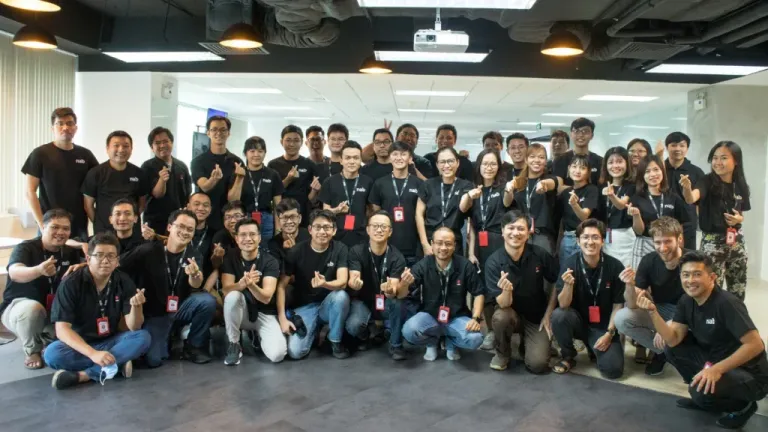
From day one, offshore engineers were fully integrated into NAB’s delivery cadence and Agile rituals such as sprint planning and daily stand-ups, with careful adaptations for time zone differences. Comprehensive onboarding and English language training supported smooth collaboration and cultural alignment.
The BOT model emphasized embedding team members deeply into NAB’s existing workflows, facilitating a seamless transition to full client ownership while sustaining consistent delivery quality throughout the growth period.
Supporting Sustainable Growth
Scaling remote teams is most effective when viewed as an ongoing capability-building process – not a one-time hiring sprint. Embedding engineers into workflows, reinforcing collaboration habits, and providing continuous support drive progressive performance improvements.
CBTW’s Build-Operate-Transfer model guides organizations through three distinct stages:
- Build: Assemble and develop a dedicated offshore team working closely with the client’s in-house staff. This phase focuses on mirroring delivery rhythms, establishing robust processes, and fostering cultural alignment.
- Operate: CBTW manages team operations, continuously optimizing performance and integration. This stage emphasizes refining ways of working, mentorship, and aligning standards to help the offshore team act as a true extension of the client organization.
- Transfer: When the team is mature, ownership can be smoothly transferred to the client with processes, tools, and mindsets already synchronized, ensuring minimal disruption.
This staged approach transforms remote teams from temporary cost centers into sustainable, high-performing capabilities. Organizations gain the flexibility and confidence to scale effectively while maintaining quality, cohesion, and long-term value.
Looking Ahead: Embracing Opportunity
Expanding remote engineering teams unlocks new perspectives, agility, and problem-solving ability. Success depends on fostering shared purpose, well-defined responsibilities, transparent communication, and supportive onboarding.
By focusing on these essentials, organizations can convert expanded capacity into tangible progress. Well-integrated remote teams become resilient, empowered contributors that consistently advance products – regardless of geographic location.
Planning to Scale?
If you’re preparing to grow your engineering team, now is the time to assess your foundation. The right structures and processes will transform growth into sustained momentum.