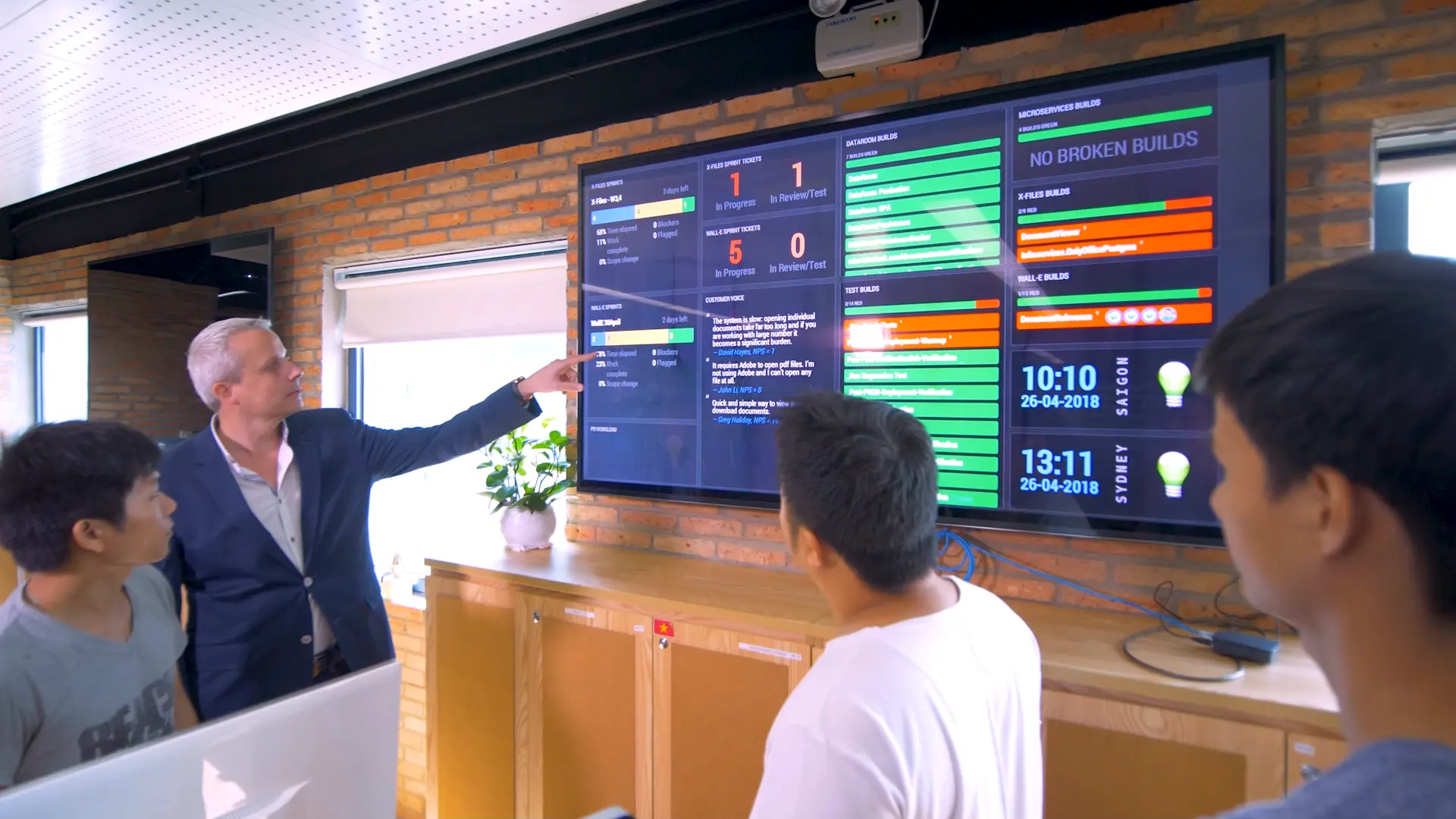





For Australian business and technology leaders building distributed engineering teams across APAC, Vietnam is already an established nearshore delivery option. Ho Chi Minh City and Hanoi have traditionally led that conversation, while Da Nang is increasingly entering the assessment as the city strengthens its focus on high technology, digital infrastructure and specialist talent.
That development is happening alongside broader Australian investment in Vietnam. As of July 2026, Australian businesses had registered 747 investment projects in Vietnam, with total registered investment capital of over US$1.9 billion.
Da Nang is making a deliberate technology push
Da Nang has introduced targeted policies for AI and semiconductor businesses, expanded support for technology talent and continued developing dedicated technology infrastructure to attract higher-value digital operations. DSEZA, the city’s Hi-Tech Park and Industrial Zones Authority, manages Da Nang’s Hi-Tech Zone, Concentrated Digital Technology Zone, Industrial Parks and Free Trade Zone, bringing these technology and investment environments under a single authority.
For businesses in qualifying AI and semiconductor activities, Da Nang’s incentive framework includes a 100 per cent corporate income tax exemption for five years from the time tax liability arises, alongside personal income tax support for eligible specialists. Qualifying projects within Da Nang’s International Financial Centre can access additional incentives under Resolution 222/2025/QH15. Eligibility depends on the activity, legal structure and location of the proposed operation, so the applicable incentives should be assessed before investment decisions are made.
A growing pipeline for AI and advanced engineering
As of June 2026, Da Nang had 38 AI startups operating in Software Park No. 2 and 4,695 students being trained in AI and related disciplines. This gives the city a growing talent pipeline in areas relevant to organisations building AI, data and advanced engineering capabilities.
The city is also introducing measures to help qualifying technology businesses attract skilled people, including relocation assistance and contributions towards selected hiring costs. Together, these developments strengthen the depth of the technology workforce available to businesses establishing engineering capability in the city.
Why it works for Australian distributed teams
Vietnam already has one structural advantage for Australian teams: working hours overlap. Product discussions, engineering stand-ups, architecture reviews and release decisions can happen during the same business day rather than through a model built around overnight handovers.
Da Nang adds another delivery location within that Vietnam footprint. For organisations building software, data or AI capability, the combination of working-hour overlap, a developing specialist talent base and a structural cost advantage over Australian onshore engineering creates a practical option for teams that need close interaction with product, engineering and business stakeholders in Australia.

Just as importantly, nearshore delivery can provide access to engineering capacity at a pace that is difficult to achieve through onshore recruitment alone. This remains particularly relevant as AI changes the economics of software development. AI-assisted engineering can increase the productivity of individual engineers, but it does not remove the need for experienced people to provide architecture, validation, security, quality control and governance. The advantage therefore increasingly comes from combining AI-enabled productivity with the ability to assemble and scale strong engineering teams quickly and economically.
Da Nang may serve as the primary location for a new offshore delivery centre or complement an existing distributed engineering footprint in Vietnam. The right choice will depend on the capability being built, as product engineering, enterprise technology, data and AI place different demands on talent, tooling, governance and infrastructure.
Building nearshore delivery capability from here
CBTW has been delivering software engineering from Da Nang for Australian businesses through dedicated embedded teams, the first stage in the offshore delivery centre maturity path. A global gifting platform with an Australian-based team works with a dedicated CBTW engineering team in the city, supporting payment systems development, backend integrations and platform enhancements across its digital gift card ecosystem.
As requirements grow, a dedicated team can develop into a more mature delivery centre with broader operational responsibility and deeper alignment to the client organisation. For businesses seeking eventual ownership, Build Operate Transfer takes that maturity path further.
CBTW has delivered more than 25 BOT engagements across Vietnam, including for NAB, MessageMedia, Ansarada, Magnolia, hipages and Atlassian, covering the recruitment, infrastructure, governance and operational foundations required to establish and scale dedicated engineering capability.
The delivery model determines the outcome
Da Nang can provide the talent, infrastructure and operating environment, but those advantages only go so far. The longer-term outcome depends on how the offshore delivery centre is structured and integrated from the outset.
Recruitment, tooling, security, governance and AI usage need to be designed around the organisation’s technology environment rather than treated as separate workstreams. The decisions made early on shape how quickly the team becomes productive, how closely it works with Australian stakeholders and how easily the capability can take on greater responsibility over time.
This becomes even more important as AI-assisted development becomes part of everyday engineering. Organisations need clear governance around where AI is used, how generated code and outputs are reviewed, how intellectual property and data are protected and where human accountability remains essential.
Getting this right from the beginning allows the delivery centre to become part of the organisation’s engineering capability rather than a separately managed external resource.
Da Nang belongs on the shortlist for your nearshore delivery centre
Da Nang has the talent, technology ecosystem and operating environment to warrant serious consideration as a nearshore delivery centre location for Australian businesses. The next decision is how that capability should be structured, integrated and, where relevant, eventually owned.
Through our offshore development services, Team Extension and BOT models, we help Australian businesses establish and scale dedicated engineering capabilities in Vietnam with those requirements built in from the outset.
The traditional advantages of nearshore engineering – access to talent, faster scaling and a structural cost advantage over onshore recruitment – remain highly relevant in an AI-assisted development environment. What changes is the productivity of that talent.
As a member of the Claude Partner Network, we incorporate AI across coding, review, refactoring, documentation and quality assurance while maintaining the human architecture, validation, security and governance required for enterprise delivery. The result is not AI replacing the engineering team, but a more productive engineering model that combines AI leverage with scalable human capability.
If you’re assessing Da Nang for your next offshore delivery centre or as a base for distributed engineering teams, talk to CBTW Australia about the right setup, delivery model and path to ownership for your business.